How to Repair a Torn Window Screen: Step-by-Step Guide
A torn window screen can be more than just a small inconvenience. It can let in bugs, dirt, and even rain, affecting your home's comfort and cleanliness. Luckily, fixing a torn window screen is a simple task you can handle yourself with the right tools and materials.
Whether it's due to storm damage or regular wear and tear, knowing how to repair a window screen is a valuable skill. It saves you the cost of hiring a professional and keeps your screens looking new and functioning well. With just a few common tools and some patience, you can restore your screen to good condition.
This guide will walk you through everything you need, from gathering materials to applying the finishing touches. You'll be confident in your ability to repair window screens by following these steps. Let's get started on bringing your window screen back to perfection!
Gathering the Necessary Tools and Materials
Before you start repairing your torn window screen, it's important to gather all the necessary tools and materials. This will make the process smoother and quicker. Here’s what you need:
Tools Required:
1. Flathead Screwdriver: To pry the window screen spline out of the frame.
2. Utility Knife: For trimming excess screen material.
3. Scissors: To cut the new screen to size.
4. Screen Rolling Tool: To press the spline back into the frame.
5. Measuring Tape: To measure the frame for the correct screen size.
Materials Needed:
- Replacement Screen Material: Choose from fiberglass or aluminum based on your needs.
- Screen Spline: This flexible cord helps hold the screen in place.
- Spline Roller: If not included with the tool, this device is necessary for securing the spline.
Once you have these tools and materials ready, you're all set to move on to the next step. Having everything at hand ensures you won't have to stop midway through the repair process, which can save time and reduce frustration.
Removing the Damaged Screen
Now that you’re equipped with your tools, the first step is removing the old, damaged window screen. Here’s how you can do it:
Steps to Remove the Old Screen:
1. Remove the Screen Frame: Carefully take the entire frame out from the window using a gentle push from the inside.
2. Pry Out the Spline: Use the flathead screwdriver to gently pry the spline away from the frame. This will release the old screen material.
3. Detach the Screen: Pull out the old screen once the spline is removed. Be gentle to avoid bending the frame.
Handling Tips for Screen Frames:
- Avoid Excessive Force: When prying the spline, apply even pressure to avoid damaging the frame.
- Frame Checking: Before proceeding to the next step, ensure the frame is intact and free from any dents or warps, which might affect the re-installation of the new screen.
By carefully managing this step, you preserve the integrity of your screen frame, making it ready to accommodate the new screen material without issues. This process is essential as it sets the foundation for a smooth installation of the new screen.
Installing the New Screen
Now that you have removed the damaged screen, it's time to install the new one. Start by cutting a new piece of screen material about an inch larger than the frame. This ensures you have ample material to fit snugly.
Steps to Fit the New Screen:
1. Lay the Screen Over the Frame: Align the screen so that it covers the entire frame uniformly.
2. Insert the New Screen Spline: Begin by placing the new spline on one corner of the frame. Use the screen rolling tool to press the spline into the groove, securing the screen to the frame. Work your way around the frame, ensuring the screen stays taut.
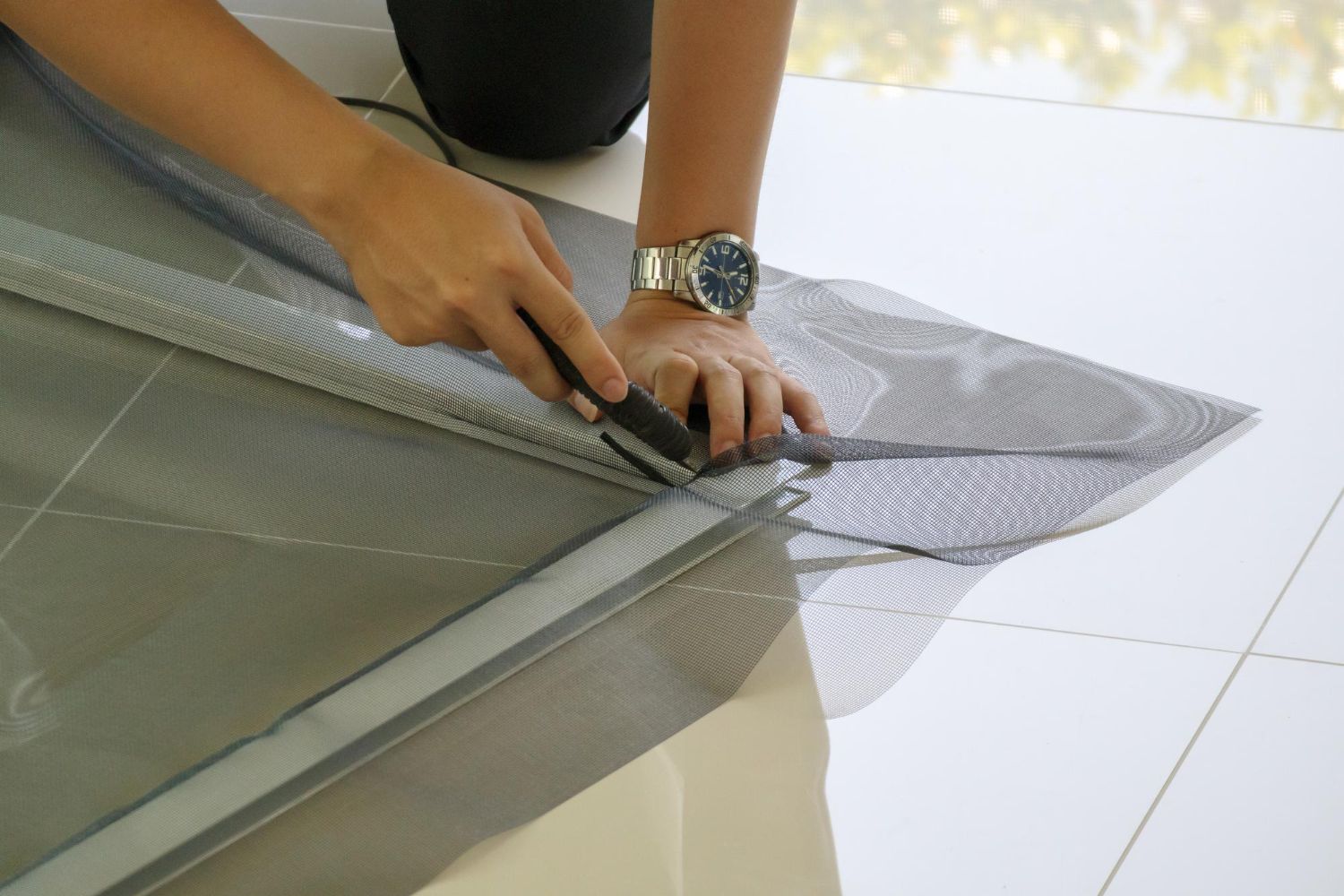
3. Trim Excess Material: After the spline is secured, use a utility knife to carefully cut off any excess screen along the outer edge of the spline. Be cautious when cutting close to the spline without damaging the fabric.
Tips for a Neat Finish:
- Consistent Tension: Maintain even tension when rolling the spline to prevent wrinkles or sags.
- Double-Check Edges: Ensure all edges are securely in the groove. This prevents the screen from coming loose.
This step is crucial to achieve a professional-looking repair and ensure the screen functions properly by keeping out pests and debris.
Finishing Touches and Maintenance Tips
With the screen successfully installed, it’s time for some finishing touches and to consider regular maintenance to extend its lifespan. This will keep your screens looking great and functioning effectively for longer.
Final Checks for Installation:
- Inspect the Screen: Look for any loose areas or sections that might need re-tensioning.
- Test the Frame: Ensure it fits securely when placed back into the window frame, without any wobbling.
Regular Maintenance Tips:
1. Routine Cleaning: Use a soft brush or vacuum attachment to clear dust and debris that can accumulate on screens.
2. Check for Damage: Regularly inspect for tears or loose splines, particularly after harsh weather.
3. Re-tighten if Necessary: Sun exposure and temperature changes can cause screens to slacken, so occasionally re-tighten the spline.
By incorporating these checks into your routine, your screens will remain effective and durable, protecting your home efficiently.
Conclusion
Repairing a window screen is a straightforward task when you have the right tools and a clear guide to follow. From gathering the necessary materials to applying the finishing touches, each step ensures your screens not only look good but perform their primary job of keeping out the elements. A well-maintained screen can significantly enhance the comfort and health of your home.
Say goodbye to unwanted insects and grime. At Raleigh Screen Solutions, we’re always here to help with expert advice and professional window screen repair services for your home screening needs. Whether it's a DIY repair or you need our touch, count on us to make sure your screens are in top-notch condition!